Lawful Canopy Control
Achieve desired clearances and height reduction without breaching ACT tree protection legislation.
Professional canopy management, height reduction, and safe alternatives to damaging tree lopping in Ainslie.
Serving homeowners across Ainslie, Hackett, Campbell, and surrounding areas.
When searching for tree lopping Ainslie homeowners are usually looking to solve real problems: a tree that has outgrown its boundary, blocks northern winter sun, or looms over the roof. We provide professional canopy reduction and selective height management that achieves your goals safely.
In Ainslie, traditional tree topping or lopping is strictly prohibited on regulated trees under the Urban Forest Act 2023. Indiscriminate cutting leaves mature trees vulnerable to wood decay fungi and creates severe storm liabilities. We apply modern crown reduction techniques that satisfy ACT Government regulations while resolving space and safety concerns.
Achieve desired clearances and height reduction without breaching ACT tree protection legislation.
Proper reduction cuts prevent the explosion of unstable epicormic sprouts associated with traditional lopping.
Allow light into living spaces and garden beds while reducing moisture build-up against roof tiles and gutters.
Maintain the natural aesthetic silhouette of your tree rather than leaving an unsightly, hacked stump.
We assess your tree's species, dimensions, regulated status, and structure to determine the correct reduction method.
We establish whether work falls under the 10% minor pruning rule or requires a formal ACT pruning plan.
Our climbers prune branches back to lateral limbs at least one-third the diameter of the parent branch, complying with AS4373.
All cut timber and brush is chipped on site into garden mulch or carted away, leaving your block clean.
When you need professional Tree Lopping Ainslie, our team at Canberra Arborist is here to manage the size and safety of your mature trees. Ainslie properties often feature magnificent, ageing exotics and massive native eucalypts like yellow box, Blakely's red gum, and scribbly gum. As these trees mature, especially those backing onto the Mount Ainslie reserve or sitting tightly against character homes on narrower blocks, they can heavily encroach on rooflines, block solar access during cold winters, or present a serious hazard during our severe convective summer storms. While "lopping" is the common term homeowners use when looking to make their trees smaller, our qualified climbers use industry-approved canopy reduction methods. This ensures your trees remain healthy and structurally sound without triggering the rapid, weak epicormic regrowth caused by indiscriminate topping. Whether you are dealing with a sprawling English elm in your front yard or an over-extended Argyle apple hanging over your carport, we provide the controlled height and spread reduction required for safe inner Canberra living.
It is incredibly common for property owners to ask us to simply "chop the top off" a tree that has grown too large for its location. However, true horticultural tree lopping—which involves making indiscriminate heading cuts that leave large, bare stubs—is a highly destructive practice. Under-qualified operators who perform this outdated method end up causing severe, irreversible long-term problems for your property.
When a branch is cut bluntly without respecting the branch collar, the tree reacts with panic growth. This epicormic regrowth is weakly attached to the outer layers of the bark and is heavily prone to snapping during the westerly wind events that frequently sweep off the Brindabellas. Furthermore, large stubs invite aggressive decay and disease, accelerating the decline of Canberra's ageing urban forest and dramatically shortening the safe lifespan of the tree.
Our solution focuses strictly on the Australian Standard AS4373 (Pruning of Amenity Trees). Instead of harmful topping, our qualified arborists perform precise crown reductions. We carefully select the correct target pruning points, bringing the canopy back to lateral branches large enough to assume the terminal role. By doing this, we reduce the height and spread of your canopy while preserving the tree’s natural defense mechanisms. This keeps the tree healthy, dramatically reduces the risk of future branch failure, and ensures your property looks immaculate rather than butchered.
While clients often ask for tree lopping, we deliver safe, AS4373-compliant canopy reduction services tailored to Canberra's unique species and climate. Here is how our climbers expertly reduce your tree's footprint.
This is the approved, scientific alternative to topping. We reduce the overall height or spread of the tree by cutting branches back to a lateral branch large enough to sustain growth (at least one-third the diameter of the cut stem). This pulls the canopy back from rooflines and service wires without creating weak, rotting stubs.
Essential for driveways, pedestrian paths, and road frontages in older suburbs. We selectively remove the lowest branches to increase vertical clearance, maintaining a balanced weight distribution so the tree remains stable during high winds and severe storms.
Instead of aggressively reducing the outer edges, we selectively remove secondary branches from within the canopy. This reduces wind resistance—crucial for large eucalypts—and improves solar access for your home and garden, which is heavily regulated in the ACT.
Targeted reduction of specific problematic limbs overhanging boundaries or encroaching on structures. We ensure we stay well within the allowable canopy removal limits set by AS4373, which is typically no more than 25 to 30 percent of the live crown for healthy, mature trees.
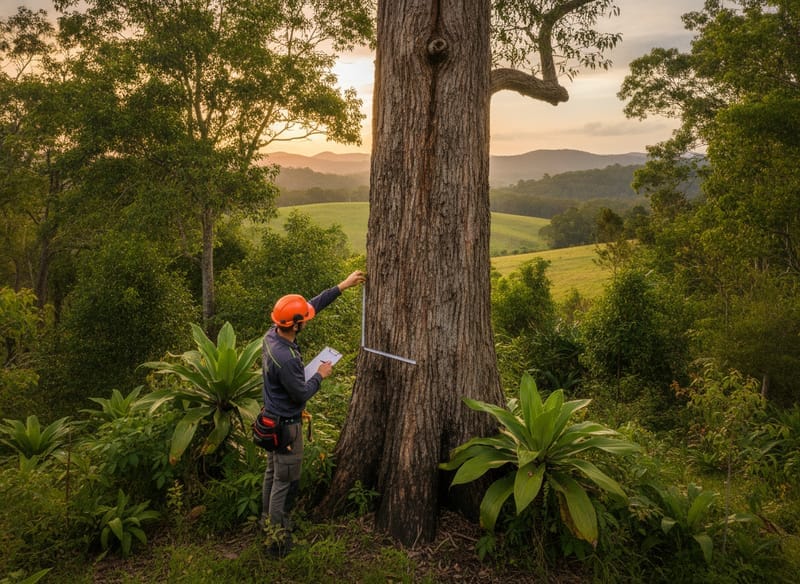
Every Tree Lopping Ainslie job begins with a detailed, site-specific assessment. We visit your property to inspect the tree in question, noting its species, health, structural integrity, and proximity to your home, fences, or overhead lines. We will discuss exactly what you want to achieve—whether that is reducing hazardous height, clearing a roofline before storm season, or improving winter sunlight for your living areas.
Because the ACT Government treats all trees 8 metres or taller (or with an 8-metre canopy spread) as regulated trees under the Urban Forest Act 2023, significant canopy reductions require a formal Tree Activity Application. Our consulting arborists guide you through this process, providing the necessary documentation and plans to ensure your pruning work is entirely legal before we schedule our trucks.
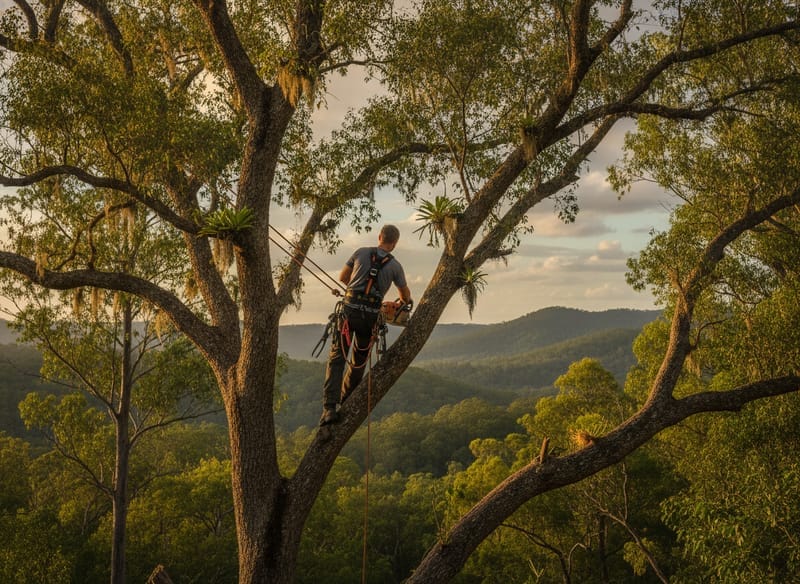
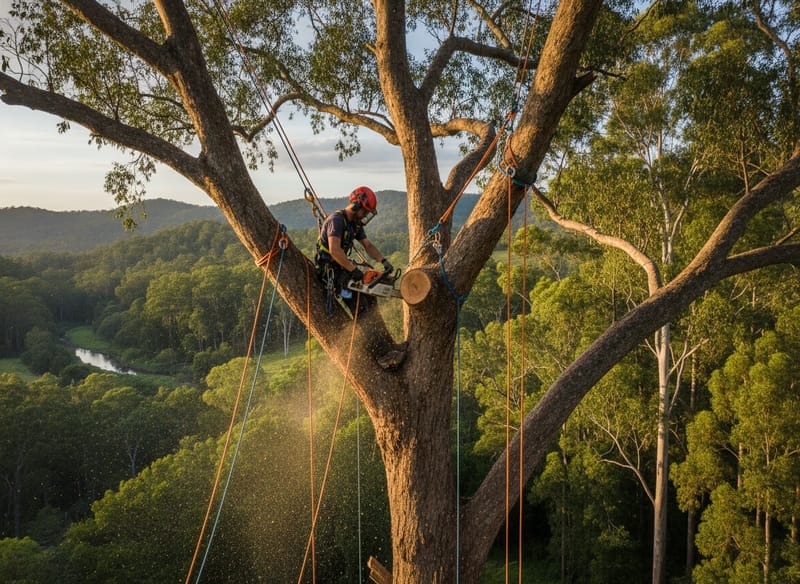
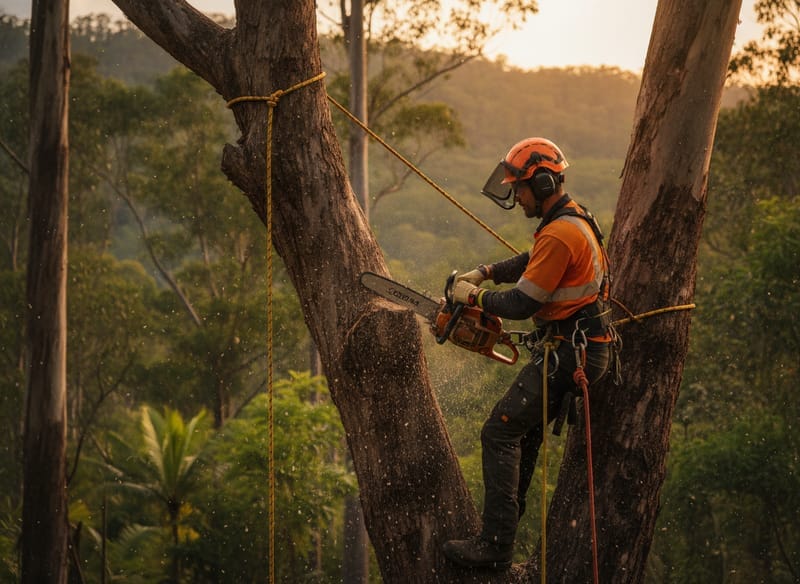
On the day of the job, our qualified climbers access the tree using advanced double-rope techniques or elevating work platforms (EWPs) where street and driveway access allows. We systematically execute targeted reduction cuts, carefully lowering heavy timber using friction devices and rigging gear so your garden, heritage features, and underlying structures remain perfectly safe from impact.
Finally, our ground crew processes all branches through our high-capacity wood chippers, converting the removed canopy into premium mulch right there on-site. We load the heavy timber into our tipper trucks and rake the site clean, leaving your Ainslie property immaculate and your tree perfectly balanced and secure.
Canopy management in Ainslie requires strict adherence to local legislation. The ACT Government's Urban Forest Act 2023 dictates that major pruning of a regulated tree (8 metres or larger) cannot proceed without an approved Tree Activity Application. Our AQF Level 5 consulting arborists can assist in preparing the required tree management plans and shadow diagrams to secure your permits.
Our operations are fully insured with public liability and WorkCover, protecting you at every stage. On-site, our team holds AQF Level 3 qualifications in arboriculture. From rope-access climbing to precise chainsaw operation, we execute every reduction safely, strictly following AS4373 guidelines to protect your property, your tree, and our staff.
Ainslie’s environment presents specific challenges for canopy management. The suburb is defined by older, narrow heritage blocks, established gardens, and an incredible mix of giant English elms, pin oaks, and brittle gums. Properties backing directly onto Mount Ainslie also fall within the ACT Bushfire Prone Area, meaning canopy reductions are frequently driven by the need to manage fuel loads and maintain Asset Protection Zones against the reserve edge.
Navigating the ACT Government's strict rules is critical here. The inner north has one of the highest concentrations of regulated and registered trees in the country, and unapproved lopping carries severe on-the-spot fines. Furthermore, the combination of tight rear lanes and massive old-growth exotics means we routinely rely on complex rigging and sometimes crane-assisted techniques to safely dismantle over-extended limbs without damaging the character homes nestled beneath them.
After an AS4373-compliant canopy reduction, your tree will need time to recover and compartmentalise the pruning wounds. We recommend keeping the root zone well-watered during Canberra's hot, dry summers to minimise heat stress. Spread a thick layer of organic mulch over the structural root zone, ensuring it does not pile directly against the trunk to prevent collar rot.
Because our team avoids harmful topping cuts, you won't experience an explosion of dangerous, weak epicormic growth. However, your tree will naturally continue to grow. We suggest booking a routine follow-up assessment with us every two to three years to monitor the tree's structure, manage any minor deadwood, and address new extensions before they encroach on your roofline again.
Pricing for canopy reduction and crown management in Ainslie depends on tree scale, canopy volume, and access constraints.
We provide transparent, fixed quotes with honest recommendations on the best arboricultural approach for your property.
We provide standard-compliant canopy reductions across Ainslie and neighbouring inner Canberra suburbs:
Control tree height and manage overgrown canopies legally and safely. Contact our team today.
Request a Canopy Reduction Quote