Enhanced Storm Resilience
Pruning reduces canopy drag, helping large exotics withstand severe westerly gales and violent summer storms.
Standard-compliant canopy pruning to preserve health, form, and safety on Forrest properties
Pruning services across Forrest, Yarralumla, Red Hill, and Deakin
Our tree pruning Forrest service focuses on enhancing tree longevity, structural balance, and property safety across the grand gardens of Forrest.
Many heritage trees in Forrest—such as London planes, claret ash, and pin oaks—face stress from hot dry summers and winter frosts. Pruning these species requires strict adherence to AS4373 to avoid stress-induced water sprouts or sunscald. Under the Urban Forest Act 2023, pruning more than 10% of a regulated tree's canopy or removing limbs over 100mm requires an ACT Government pruning plan, which we can formulate.
Pruning reduces canopy drag, helping large exotics withstand severe westerly gales and violent summer storms.
Selectively thin the crown to allow winter sun to reach living areas and solar arrays without harming the tree.
Corrective cuts eliminate co-dominant stems and crossing branches before structural cracks develop.
We inspect branch attachments, decay pockets, deadwood distribution, and overall canopy vigour.
We establish an AS4373-compliant specification (thinning percentage, reduction points, clearance metrics).
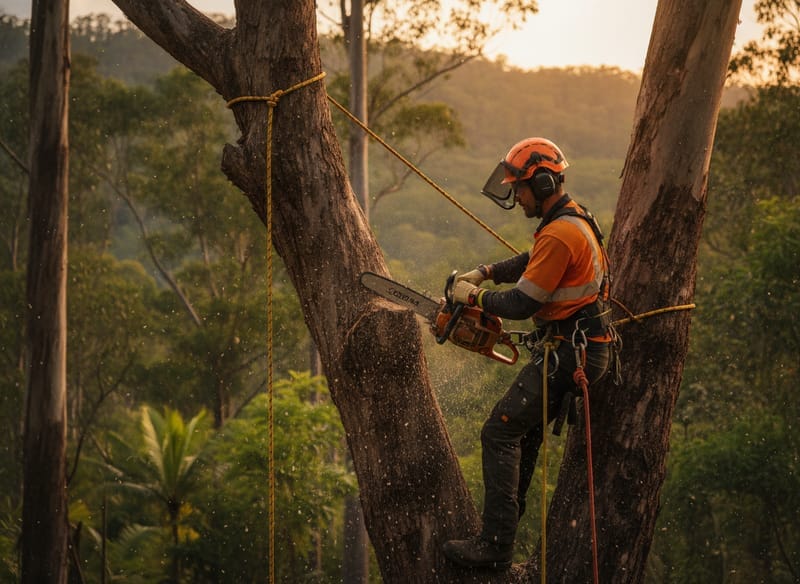
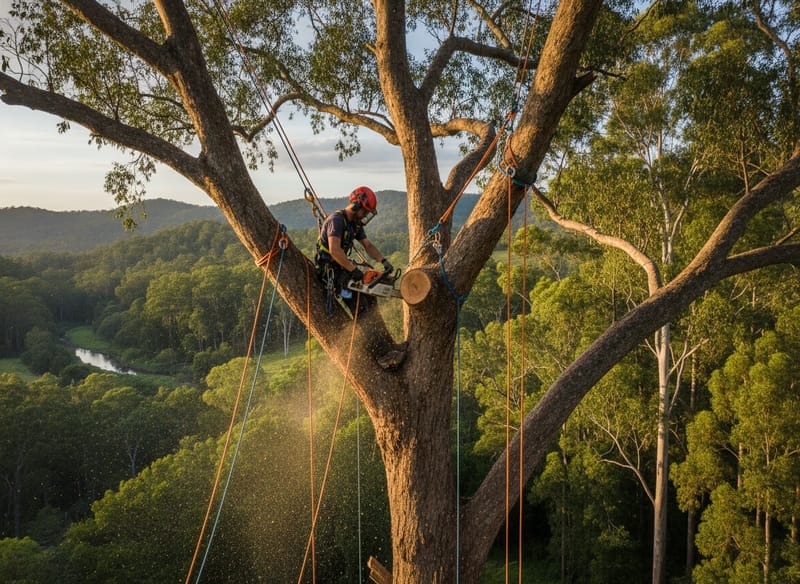
Our climbing arborists access the canopy on ropes, making clean cuts outside branch collars without tearing bark.
All pruned material is fed through our woodchipper and the site is raked and swept immaculate.
For residents and property managers overseeing mature gardens in the inner south, professional Tree Pruning Forrest is an essential part of long-term property maintenance. Laid out on Garden City lines, Forrest boasts some of the most established and historically significant tree canopies in Canberra. These historic streetscapes and deep blocks are characterised by towering pin oaks, English elms, and remnant native eucalypts like yellow box, many of which are now 80 to 100 years old.
As these magnificent trees age, they become more susceptible to heat stress, summer limb drop, and structural issues. Targeted, professional pruning is the only way to preserve their health, maintain their grand form, and ensure they remain safe over your driveway, roofline, or outdoor living areas. Our team of qualified arborists understands the specific climatic pressures of the ACT, from freezing winter frosts to severe convective summer storms.
We provide tailored canopy management that protects the aesthetic and environmental value of your property while strictly adhering to territory regulations. Whether you need to clear branches from a heritage roofline or thin a dense canopy to reduce wind resistance, our climbers have the expertise to manage Forrest's large, regulated trees.
One of the most common issues we see across Forrest, Deakin, and Red Hill is the long-term damage caused by under-qualified operators or DIY tree work. Trees in this region are large, often heavily regulated, and deeply intertwined with valuable property infrastructure. Attempting to manage them without proper training often leads to disastrous practices like 'topping' or 'lopping'.
Lopping involves indiscriminately cutting branches back to stubs. Not only does this permanently ruin the natural shape of an English elm or pin oak, but it also starves the tree of its energy reserves. The tree responds by rapidly pushing out weak, poorly attached epicormic growth. In Canberra's climate, where westerly winds and intense summer storms are common, these weak branches become major hazards for severe limb drop.
Our team provides the professional solution. We follow strict Australian Standards (AS4373) to ensure every cut is placed precisely at the branch collar. This target pruning method allows the tree to compartmentalise the wound naturally, preventing decay and fungal infections. By correctly thinning, lifting, or reducing the canopy, we mitigate wind load and structural risks, extending the safe, healthy lifespan of your valuable shade trees without triggering the aggressive, hazardous regrowth associated with lopping.
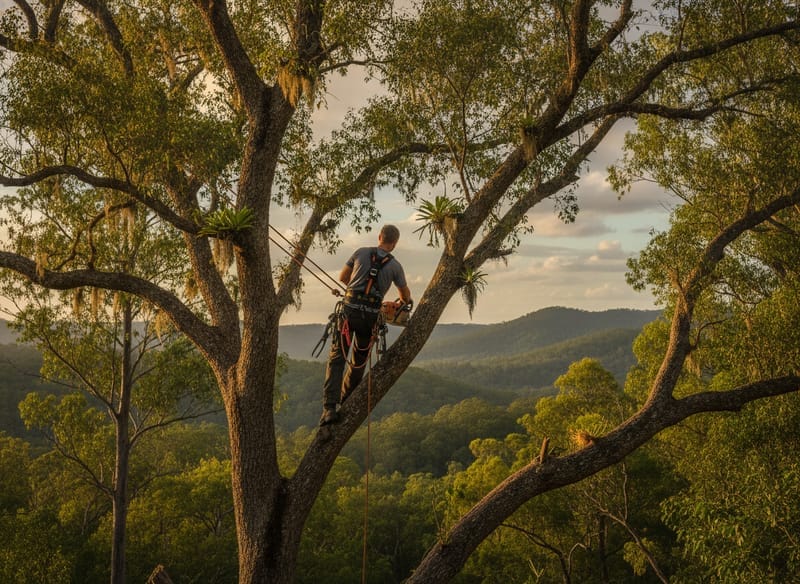
Every tree on your Forrest property is assessed for its species, age, and health before any cutting begins. We use advanced rope-access climbing techniques and elevated work platforms (EWPs) to access difficult canopies without damaging the surrounding landscape. Our team executes the following AS4373-compliant methods:
We selectively remove small live branches throughout the canopy to reduce wind load and improve light penetration while strictly preserving the tree's natural form. We ensure no more than 25 to 30 percent of the live foliage is removed in a single prune, maintaining the tree's energy reserves.
This involves carefully removing the lower branches of a tree to increase the clearance under the canopy. This is highly effective for inner-south properties needing safe clearance for vehicles, pedestrians, or clear sight lines across large residential blocks.
We systematically remove dead, dying, diseased, or damaged branches from the canopy. For large remnant eucalypts like Blakely's red gum or yellow box, deadwooding is a critical safety measure to prevent unexpected branch failure over living spaces.
Aimed at younger trees, this method establishes a strong structural framework early in life. We prune to encourage a single dominant leader and well-spaced scaffold branches, drastically reducing the likelihood of structural failure as the tree reaches maturity.
This is a highly focused approach used to address specific site issues, such as branches encroaching on service lines, rubbing against heritage homes, or co-dominant stems that pose a splitting risk. Every cut is made precisely at the branch collar.
When completing a job for Tree Pruning Forrest, our team follows a strict, safety-first methodology from the initial quote to the final cleanup. We start with a comprehensive site inspection, assessing the health of the tree, the complex terrain of your block, and any nearby obstacles like powerlines or heritage structures. Once we determine the scope of work, we check the tree against ACT Government regulations to advise you if a formal tree activity application is required. If the tree is regulated and the work constitutes major pruning, we can assist with the necessary pruning plans and compliance documentation. On the day of the job, our climbers arrive with specialised equipment. For tight-access Forrest blocks, we utilise advanced double-rope climbing techniques and top-handle chainsaws to navigate the canopy safely. If access permits, we deploy spider lifts or EWPs. As branches are carefully rigged and lowered, our ground crew processes the material through commercial-grade wood chippers. We take immense pride in our site cleanup, ensuring your lawns, driveways, and garden beds are left immaculate.
Safety and compliance are non-negotiable on every site we visit. Our team consists of AQF Level 3 climbing arborists who execute the physical canopy work, and AQF Level 5 consulting arborists who can prepare formal tree management plans and reports for ACT Government approvals.
We are fully public liability insured and carry comprehensive WorkCover for our entire crew, providing complete peace of mind when we operate on your property. All our pruning is executed in strict accordance with AS4373 (Pruning of Amenity Trees), and any required groundwork near protected root zones complies with AS4970 (Protection of Trees on Development Sites). We also maintain current Working at Heights, EWP, and First Aid certifications.
Because Forrest falls under the jurisdiction of the ACT Government, tree work here is heavily governed by the Urban Forest Act 2023. In these older inner-south suburbs, almost every mature tree is a 'regulated tree'. The law protects any living tree that is 8 metres or taller, has a canopy 8 metres or wider, or has a trunk circumference of 1 metre or more (measured 1.4 metres from the ground).
Minor pruning of a regulated tree is often exempt from approval, provided it only removes deadwood, or it is the first prune of the year, removes less than 10 percent of the canopy, and involves no branches larger than 100 millimetres in diameter.
However, major pruning, crown reductions, or prohibited groundwork inside the Tree Protection Zone requires a formal tree activity application submitted to Transport Canberra and City Services. This process can take up to 35 working days. Unapproved work carries massive penalties, which is why our team always ensures your pruning plan aligns perfectly with territory legislation before a chainsaw is ever started.
After a professional prune, your tree will naturally adjust its canopy distribution and heal over the proper branch collar cuts. During the hot, dry Canberra summers, it is vital to provide deep watering to mature trees—especially exotic species like elms and oaks—to minimise heat stress and support the healing process.
Keep the structural root zone well-mulched, but avoid piling mulch directly against the trunk to prevent collar rot. Monitor the canopy over the following seasons for any unexpected epicormic growth or signs of decline. Because Forrest’s canopy is aging, we highly recommend having our arborists return every two to three years for a routine health and safety assessment.
Pruning costs in Forrest vary based on canopy size, the complexity of aerial access, and the volume of branches to be removed.
We supply detailed, upfront written estimates outlining the exact pruning scope for every tree on your block.
Carrying out AS4373 tree pruning across Forrest and surrounding areas:
Contact our qualified arborists for expert crown care, thinning, and deadwooding.
Request a Pruning Assessment