Restored Property Access
Quickly clear blocked driveways, side paths, and outdoor areas of heavy storm debris.
Comprehensive post-storm tree clean-up, hung-up branch removal, and insurance documentation in Griffith.
Providing post-storm tree recovery services throughout Griffith and the inner south.
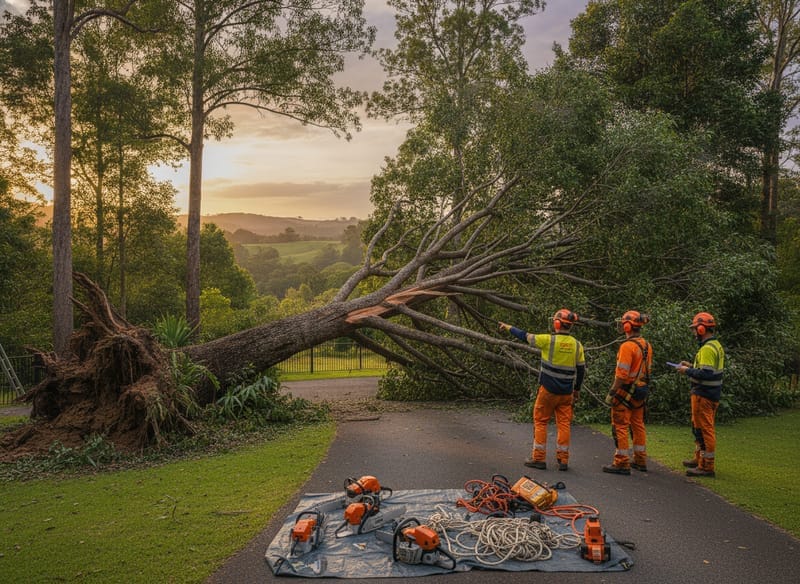
When severe convective storms or destructive winds sweep across Canberra, our storm damage tree removal Griffith team restores safety and order to your grounds.
Griffith is prone to heavy storm strikes, including severe hailstorms and violent westerly wind gusts. Mature exotics like claret ash and brittle gums often suffer split crotches and torn leaders that require expert assessment to determine whether the tree can be saved under AS4373 or must be removed.
Quickly clear blocked driveways, side paths, and outdoor areas of heavy storm debris.
Get clear, itemised arborist invoices and photographic reports formatted for rapid claims approval.
Save damaged mature trees through selective remedial pruning where complete removal is unnecessary.
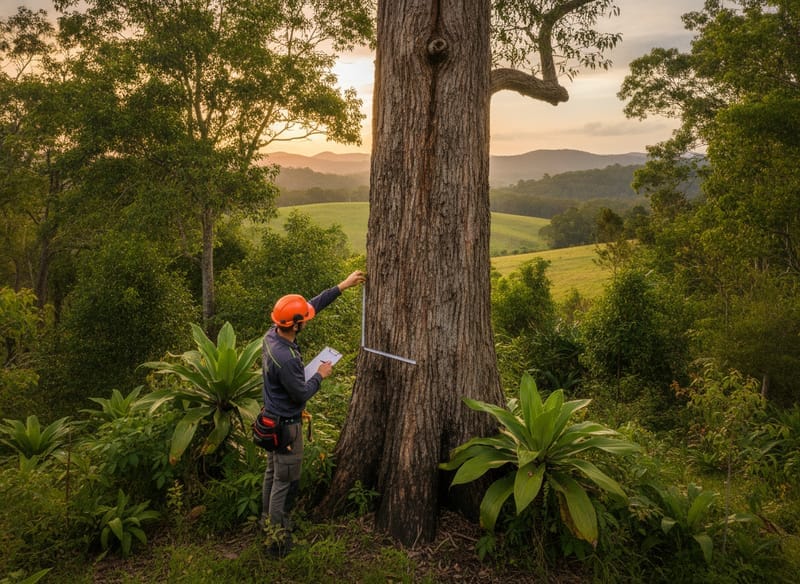
We inspect your property to identify hung-up branches, split trunks, structural root heave, and ground risks.
We provide a clear quotation prioritising structural hazards first, followed by general debris processing.
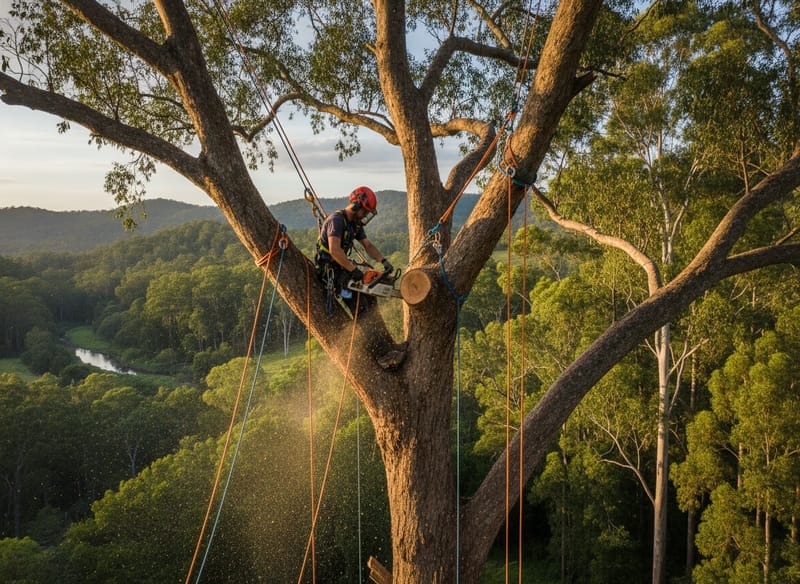
Our qualified team safely releases tensioned wood, lowers overhead hangers, and cuts fallen logs.
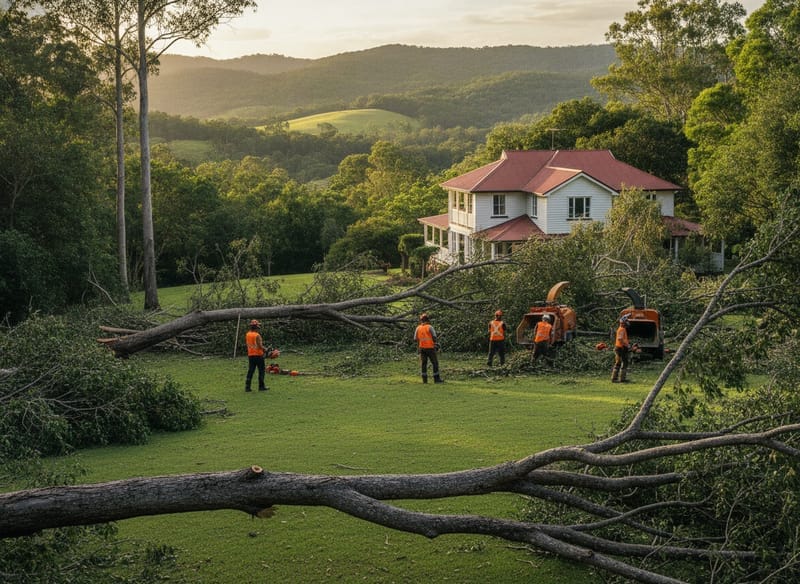
All storm debris is processed through commercial wood chippers and paths swept clean.
When severe convective storms and intense summer hailstorms sweep through the inner south, securing a professional for Storm Damage Tree Removal Griffith becomes an priority for local homeowners and property managers. The established, leafy streetscapes of the 2603 postcode are defined by magnificent, large-canopy trees laid out during Canberra's Garden City era. While beautiful, these 60 to 100-year-old exotics and native eucalypts are increasingly vulnerable to high-wind events, heavy rain, and prolonged drought stress. Whether a massive pin oak branch has come down on your roof, or a brittle gum has suffered root-plate failure after saturated rainfall, our team is equipped to respond rapidly. We specialise in making hazardous sites safe, navigating the strict requirements of the ACT Government's Urban Forest Act 2023, and efficiently clearing heavy timber from your property. With large trees often situated hard against heritage homes, fences, and powerlines, you need a local arborist with the right climbing gear, heavy machinery, and the technical expertise to execute complex, high-risk removals safely.
Attempting DIY cleanup after a storm is exceptionally dangerous. Fallen or partially failed trees are unpredictable; they often contain hidden tension, compression wood, and hung-up branches that can snap back or drop suddenly when cut. Chainsaw kickback and unexpected rolling logs cause severe injuries every storm season. Furthermore, the sheer weight of saturated timber from mature species like English elms or deodar cedars requires commercial-grade rigging and heavy machinery to move safely without causing secondary damage to your property. Beyond physical safety, there are strict legal requirements in Canberra. Under the Urban Forest Act 2023, any living tree that is 8 metres or more tall, has an 8-metre canopy width, or a trunk circumference of 1 metre at 1.4 metres above ground is a regulated tree. Dead native trees with a circumference over 1.88 metres are also protected. You cannot simply cut these up, even if they are damaged. For trees presenting an immediate danger, our AQF-qualified arborists will triage the hazard and contact Access Canberra on 13 22 81 for an urgent circumstances authorisation. We handle the legislative compliance and the physical hazard, ensuring the removal is legally documented, safely executed, and completely covered by insurance.
Handling storm-compromised timber requires a methodical, highly technical approach to prevent property damage and ensure crew safety. Our methods are strictly aligned with Safe Work Australia guidelines and the AS4373 pruning standards for any damaged trees we can salvage.
We walk the property to tag trees by priority. Immediate hazards over dwellings, power lines, or driveways are addressed first, followed by secondary hazards like hung-up limbs. We take dated photo evidence before any work begins to ensure seamless insurer reporting.
For trees presenting an imminent threat to life or substantial buildings, we secure the site and contact Access Canberra for immediate authorisation. Our climbers use single-rope or double-rope techniques and top-handle climbing saws to safely dismantle suspended limbs and relieve tension before the trunk is addressed.
Griffith blocks often feature large trees in tight spaces or over heritage roofs. Where Elevating Work Platforms (EWPs) cannot reach, we employ advanced rope rigging or loader cranes to safely lift and lower heavy sections of compromised timber without impacting the underlying structures.
Once the hazard is on the ground, our ground crews use heavy-duty chainsaws to process the logs. We run high-capacity wood chippers to process limbs into mulch on-site, and utilize self-propelled stump grinders to remove up-ended root plates to below ground level, leaving the area safe and level.
We provide highly detailed, itemised quotes breaking out each tree and job line. Because we are AQF Level 3 and Level 5 qualified, our assessment reports are formatted for direct submission to your insurer, accelerating the claims process during busy storm seasons.
When a severe westerly wind event hits, you need a responsive and structured approach to clearing hazards. Our Storm Damage Tree Removal Griffith process is designed to bring order to chaotic situations swiftly. First, we conduct an emergency call-out to secure the site. We isolate the immediate hazard, establishing drop zones and ensuring no residents or structural assets are in the direct line of fire. If a massive limb is suspended over a roof, we deploy our spider lifts or rigging gear to safely bear the weight. Next, we conduct a rapid regulatory check. If the affected tree meets the ACT Government's regulated size thresholds (8m height/canopy or 1m trunk circumference) and is not completely fallen, we coordinate with Access Canberra for an urgent circumstances authorisation. We also prepare comprehensive photo documentation and an itemised quote for your insurance provider. Once authorised, our AQF Level 3 climbing arborists and ground crews dismantle the tree section by section. We manage tensioned wood carefully, processing the canopy through our chippers and removing heavy logs via tipper trucks. Finally, our skid steers execute a thorough site cleanup, ensuring your Griffith property is completely clear of hazardous debris and ready for repair.
Our operations are fully insured for public liability and WorkCover, giving you total peace of mind when heavy machinery and large trees are interacting near your home. We strictly adhere to AS4373 (Pruning of Amenity Trees) when conducting restorative pruning on storm-damaged trees, ensuring we don't compromise their future structural integrity. Compliance in Canberra is non-negotiable. We ensure every removal or make-safe operation on a regulated tree is completely above board. Whether securing a rapid authorisation for a dangerous leaner or advising on canopy contribution agreement obligations following a removal, we manage the ACT Government compliance from start to finish.
Griffith is characterised by its premium, heritage-overlay properties and an ageing canopy from the original Garden City plantings. Large English elms, pin oaks, and deodar cedars frequently share blocks with established natives like yellow box and Blakely's red gum. After 60 to 100 years, many of these trees are reaching the end of their safe life expectancy, particularly as Canberra's cool temperate climate oscillates between intense drought and saturated wet seasons.
Summer hailstorms and severe convective winds frequently cause major limb drops in the eucalypts and root-plate failures in top-heavy exotics. Because blocks in the inner south often feature long driveways, hedged boundaries, and tight access, our heavy crane and spider lift capabilities are routinely required. Furthermore, any groundwork near retained trees must respect the Tree Protection Zone (TPZ) under AS4970 guidelines, ensuring that our cleanup machinery doesn't damage the roots of the healthy regulated trees on your block.
After the immediate storm damage has been cleared, it is vital to monitor the remaining mature trees on your property for delayed stress. Saturated soils and high winds can weaken root systems without felling the tree. Watch closely for soil heaving, fresh cracks in the ground around the trunk, or an uncharacteristic lean—these are critical warning signs of impending root-plate failure. Keep all dated photos and our arborist notes on file, especially if dead exotic trees were cleared without formal approval, as proof of compliance. Before the next summer storm season begins, call us back to arrange a formal health assessment by our AQF Level 5 consulting arborist. Proactive hazard reduction and structural pruning to AS4373 standards is the best defence against future storm damage.
Storm damage clean-up costs in Griffith depend on the volume of fallen timber, hazard levels, and equipment access.
We provide clear, honest pricing with itemised breakdowns to assist you with insurance claims and personal budgeting.
We provide storm damage tree removal across Griffith and neighbouring inner south and central Canberra suburbs.
Contact our qualified arborists for professional storm recovery, limb removal, and insurance reports.
Get a Free Quote